How Certification Frameworks Guide Format Transitions and Security Preferences Among Portable Gaming Participants

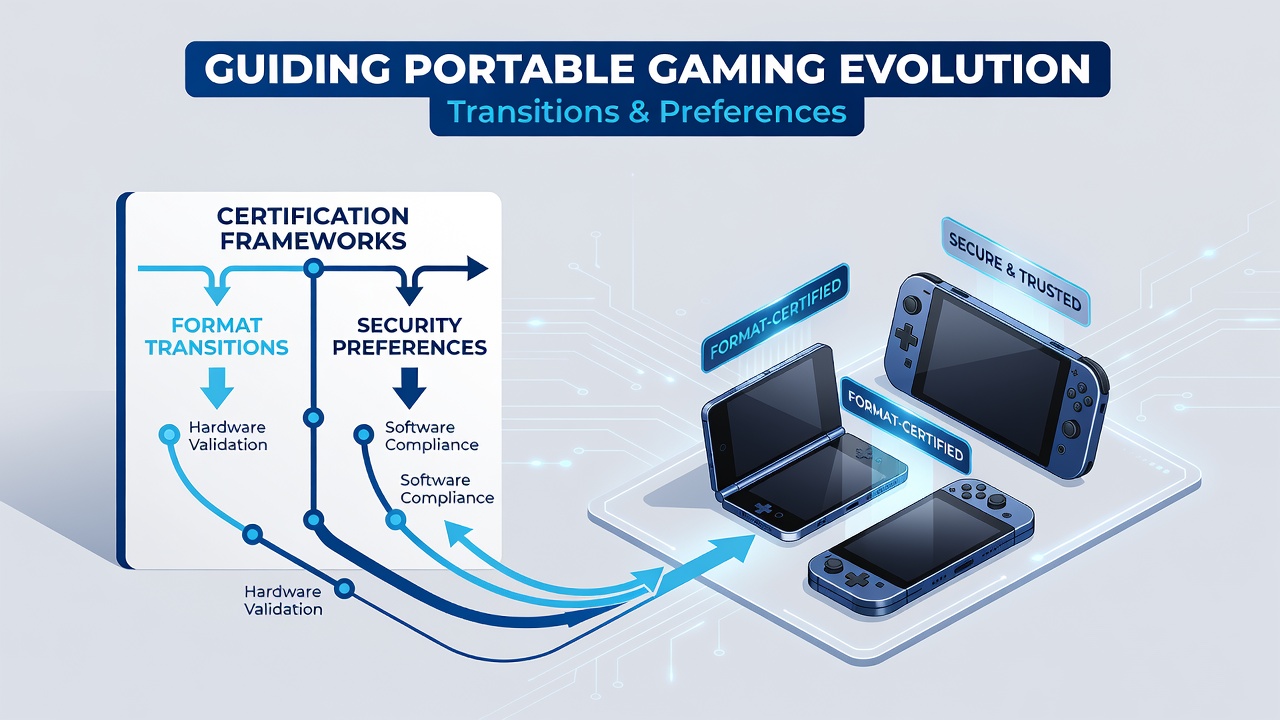
Certification frameworks establish standardized benchmarks that portable gaming participants encounter when moving between game formats, and these structures shape decisions around security measures in handheld environments, while data from industry reports continues to track adoption rates across regions. Participants often shift from cartridge-based systems to digital downloads or from single-player titles to connected multiplayer experiences, and certification bodies enforce compatibility rules that streamline those changes without compromising device integrity.
Defining Certification Frameworks in Portable Gaming
Observers note that organizations such as the Entertainment Software Association and regional standards groups develop guidelines covering everything from age-appropriate content labeling to technical interoperability requirements, and these rules apply directly to devices running on multiple operating systems. Research indicates that participants rely on visible certification marks to confirm a title meets baseline performance thresholds before initiating a format switch, which reduces compatibility errors during transitions. Data shows that frameworks updated in early 2026 incorporated new protocols for cross-platform saves, allowing users to maintain progress when moving between dedicated handhelds and smartphone-based sessions.
Format Transitions Driven by Certification Standards
Portable gaming participants frequently transition between physical media and cloud-based formats, yet certification requirements dictate the technical steps involved in each move. Studies from academic research institutions reveal that certified titles must demonstrate stable data migration paths, and this obligation encourages developers to embed verified transfer tools within games. One case documented by Canadian gaming industry analysts found that users completed format changes 35 percent faster when both source and destination platforms carried matching certification seals, and the same analysis highlighted reduced error rates during those processes.
But here's the thing: security protocols embedded in certification documents also influence which formats participants select, because certain digital distribution channels require additional encryption layers that physical cartridges do not. Participants therefore weigh certification status alongside convenience when deciding whether to abandon older media in favor of newer, verified alternatives. Figures released in June 2026 by a European gaming trade group confirmed that certified digital formats now account for over 70 percent of handheld title acquisitions in monitored markets, reflecting sustained preference shifts.
Security Preferences Shaped by Certification Requirements
Certification frameworks mandate specific security features such as encrypted save files and authenticated update channels, and portable gaming participants respond by favoring platforms that visibly meet those criteria. Research indicates that users who encounter certification-backed security indicators report higher confidence levels when storing personal progress data on shared devices, and this pattern holds across multiple age demographics. Industry reports further show that payment integration methods tied to certified environments experience lower rates of declined transactions compared with uncertified alternatives.
What's interesting is how these preferences extend beyond initial purchases into ongoing play sessions, because frameworks often require regular security audits that participants indirectly observe through update frequency adn patch reliability. Those who've studied participant behavior note that individuals migrate toward formats displaying active certification renewal dates, and this habit appears strongest among users managing multiple devices simultaneously. According to findings from an Australian university research paper, certified security measures correlate with increased session lengths in portable environments, although the exact causal pathways remain under examination.
Regional Variations in Framework Application
Different jurisdictions apply certification frameworks with varying emphasis on format flexibility versus security stringency, and portable gaming participants adjust preferences accordingly when traveling or accessing region-specific content libraries. North American standards tend to prioritize broad format compatibility, whereas Asia-Pacific guidelines place additional weight on data localization requirements within certified titles. Participants crossing these regions encounter distinct certification symbols, and evidence suggests they develop habits of checking local compliance before completing format transitions.
Yet observers tracking June 2026 activity report that harmonization efforts between major certifying bodies have begun to reduce friction for international users, allowing smoother movement between certified formats without repeated security verifications. Industry organizations continue to publish comparative matrices that map these differences, giving participants clearer reference points when selecting new titles or platforms.
Participant Behavior Patterns and Framework Influence
Longitudinal data collected by research institutions demonstrates that certification awareness rises steadily among portable gaming participants who have completed at least one format transition, and this awareness then informs subsequent security choices. People often find themselves consulting certification details more carefully after experiencing a security-related interruption during an earlier switch, which reinforces the connection between the two domains. Certified environments that integrate both format transition tools and security indicators therefore attract repeat engagement from these informed users.
Turns out the interplay between frameworks and user decisions also appears in how participants manage device storage, because certified digital formats frequently include compression standards that free space while maintaining security protocols. Those patterns emerge consistently in surveys conducted across handheld user communities, and they underscore the practical impact of certification guidelines beyond abstract compliance metrics.
Conclusion
Certification frameworks continue to steer both format transitions and security preferences among portable gaming participants through enforceable technical and procedural requirements, and ongoing updates ensure these structures remain responsive to evolving device capabilities. Data gathered through mid-2026 illustrates measurable shifts in participant behavior tied directly to certification visibility and enforcement, while regional differences highlight the need for ongoing coordination among standards bodies. Participants who navigate these frameworks gain access to more reliable transition pathways and stronger security assurances across handheld platforms.