How Reward Structures Shape Self-Limitation Choices Across Reel Spins and Strategy Tables in App-Driven Play Environments
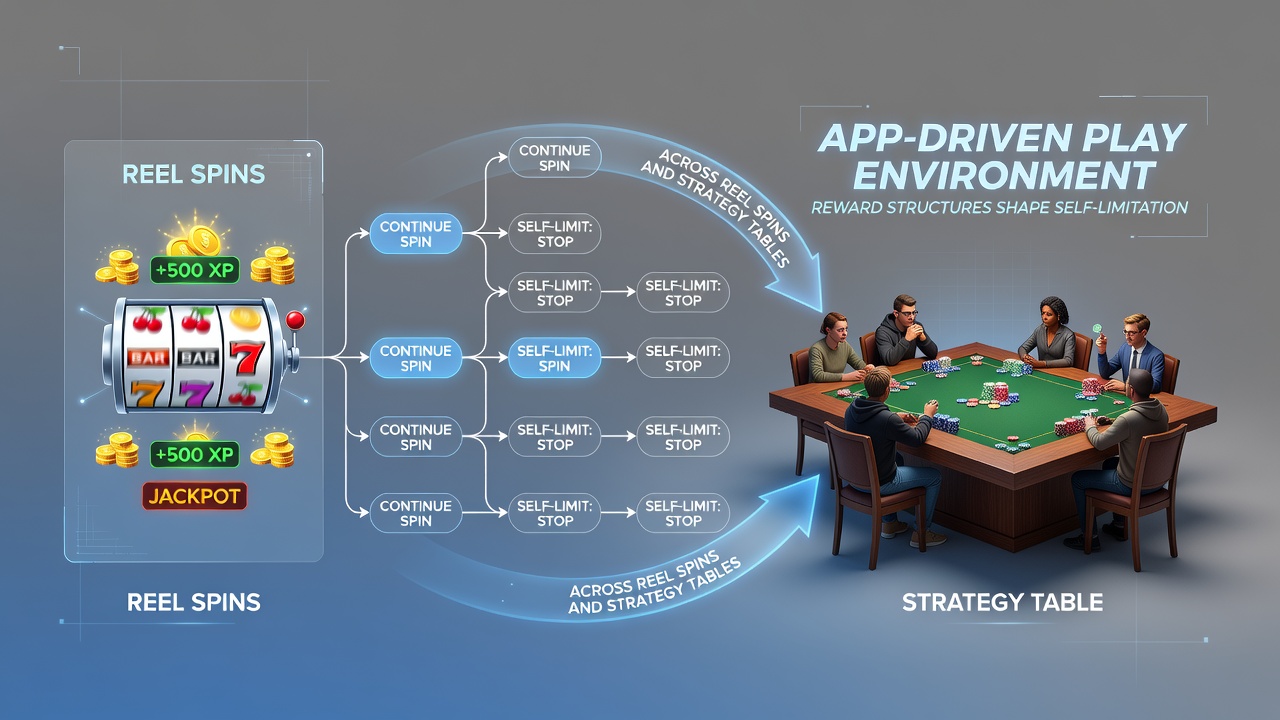
App-driven play environments have expanded how players interact with both reel spins and strategy tables, and reward structures now sit at the center of decisions around self-limitation. These structures include loyalty tiers, bonus multipliers, cashback percentages, and streak-based incentives that accumulate across sessions, and they often intersect with tools that let users set deposit caps, session timers, or temporary exclusions. Observers note that the way rewards are earned and displayed can influence whether players activate or adjust those controls during play.
Data released in July 2026 from several North American operators showed that users who reached mid-tier loyalty status adjusted their deposit limits more frequently than those at entry or top tiers. The pattern appeared across both slot-focused and table-game-heavy apps, yet the timing of adjustments differed depending on game type. Reel-spin users tended to review limits after completing a bonus round cycle, while strategy-table participants often revisited settings between hands or rounds when point accrual slowed.
Reward Accumulation Patterns in Reel Spins
Reel-spin titles typically deliver frequent small rewards through free spins, symbol multipliers, and progressive jackpots that reset or carry over within the same app session. These mechanics create short feedback loops that keep point totals climbing even during modest bet sizes. Researchers at the University of Nevada’s gaming studies program documented that players on reel-focused platforms reached loyalty milestones 18 percent faster on average than those primarily using strategy tables, according to session logs collected between January and June 2026.
Because rewards trigger automatically after each spin sequence, many users encounter visual progress bars that fill in real time. This visibility can prompt an immediate check of self-limit settings before the next spin cycle begins. One operator reported that in-app prompts linking reward progress to remaining deposit allowance reduced the average number of spins per session by 12 percent among users who had previously set weekly caps.
Strategy Tables and Extended Reward Cycles
Strategy tables operate on slower reward cycles because point accrual depends on hand outcomes, bet sizing, and game-specific multipliers such as blackjack payouts or poker rakeback. These mechanics encourage longer sessions where players track cumulative points across multiple decisions rather than single spins. Figures from the Canadian Centre on Substance Use and Addiction released in July 2026 indicated that table-game users adjusted time-limit settings more often than deposit caps, citing the need to manage extended play periods without losing accumulated tier benefits.
Operators have responded by embedding reward summaries directly into the table interface, showing both current points and projected tier advancement if the session continues. This presentation style lets users see exactly how continued play affects future reward eligibility while the self-limit menu remains one tap away.
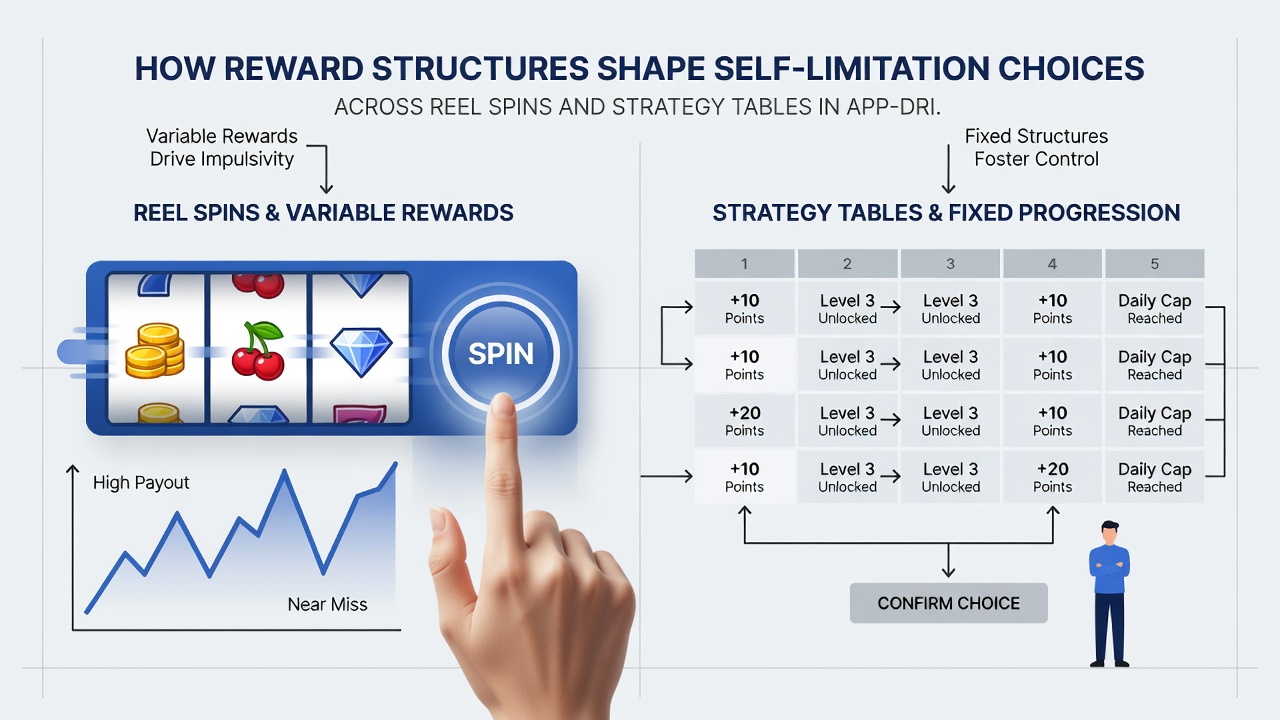
Integration of Self-Limitation Tools with Reward Displays
Modern casino apps now place self-limitation menus adjacent to reward dashboards so that point totals and limit status appear on the same screen. This layout emerged after several jurisdictions updated responsible-gaming guidelines in 2025, requiring clearer separation between reward progress and spending controls. Players can therefore review both elements without leaving the active game.
Studies conducted by the Australian Gambling Research Centre found that when reward notifications included a direct link to the current limit status, users modified their settings 27 percent more often during the same session. The effect held across reel and table formats, although table users tended to extend rather than tighten limits when nearing a tier threshold.
Cross-Game Movement and Limit Adjustments
App ecosystems that allow seamless switching between reel spins and strategy tables create additional decision points. A player who earns most rewards on slots may switch to tables once a daily deposit cap approaches, seeking slower-paced play that still accumulates points. Transaction records from multiple platforms in the first half of 2026 showed that such switches coincided with temporary limit increases in roughly one-third of cases.
Conversely, some users set stricter weekly caps after moving from high-frequency reel play to tables, where session length became the dominant factor in reward earning. These shifts illustrate how reward structures tied to specific game mechanics can steer the direction of self-limitation choices rather than simply increasing or decreasing overall limits.
Conclusion
Reward structures continue to evolve alongside self-limitation features in app-driven environments, shaping when and how players review their boundaries across reel spins and strategy tables. Data from July 2026 onward will clarify whether current interface designs sustain these patterns or prompt further refinements by operators and regulators.