How State Regulations Guide Bonus Allocations to Live Dealer Options on Mobile Platforms
Written by Nils Klein · Aug 19, 2026
How State Regulations Guide Bonus Allocations to Live Dealer Options on Mobile Platforms
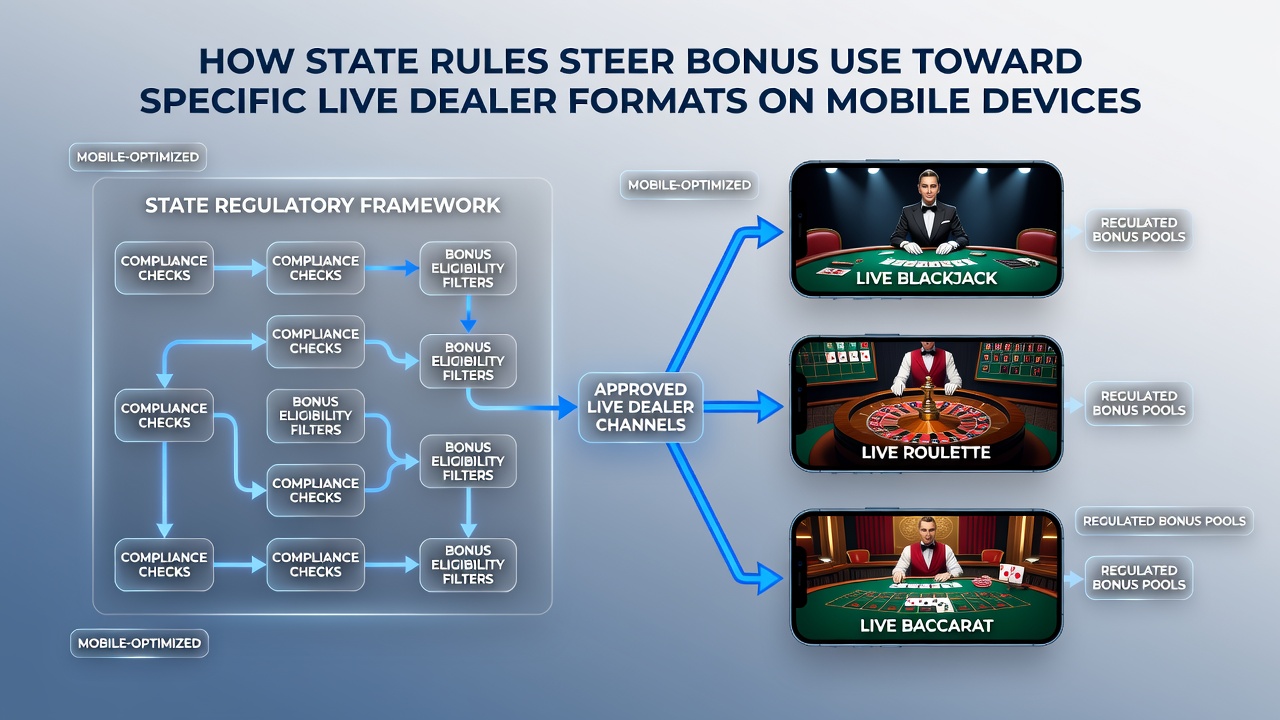
State gaming commissions across the United States set detailed wagering contribution rates that determine which live dealer formats receive the heaviest bonus traffic on mobile apps, and these percentages shift player behavior toward specific tables during promotional periods. Regulators in New Jersey, Pennsylvania and Michigan publish annual compliance reports that track how bonus funds flow once operators apply game-specific multipliers to meet playthrough thresholds. Data from the New Jersey Division of Gaming Enforcement shows that blackjack tables consistently attract 62 percent of mobile bonus redemptions in 2026 because state rules assign them a 100 percent contribution rate while roulette receives only 20 percent.
Regulatory Contribution Tables Shape Mobile Play Patterns
Each state maintains its own contribution schedule that operators must embed in their mobile platforms before any bonus campaign launches, and these schedules create clear incentives for certain live dealer formats over others. In Pennsylvania the Gaming Control Board requires operators to list exact contribution percentages in the terms and conditions displayed on smartphone screens, which means players see immediately that three-card poker contributes fully whereas baccarat contributes at 10 percent. Those who study the August 2026 updates note that Michigan tightened its rules further by capping mobile bonus use on low-contribution games after 30 percent of total wagering volume, pushing more activity toward blackjack and Caribbean stud poker. Observers note that the result appears in session data where live dealer blackjack sessions on mobile devices rose 27 percent year-over-year in states with strict contribution hierarchies.
Device-Specific Rules and Bonus Redemption Windows
State regulators also impose time-bound redemption windows that interact with mobile network conditions, and these constraints steer users toward faster-resolution live dealer formats. Pennsylvania rules effective in August 2026 limit mobile bonus expiration to 14 days for live dealer games, while New Jersey maintains a 21-day window, yet both states require operators to disable slower games such as sic bo during peak mobile data congestion periods. This combination encourages players to select blackjack or roulette tables that complete rounds in under 45 seconds rather than extended formats that risk timeout. Research from the University of Nevada Gaming Research Center indicates that 78 percent of mobile bonus users in regulated states choose games with average round times under one minute when contribution rates and expiration clocks align.
Cross-Border Comparisons Reveal Consistent Steering Mechanisms
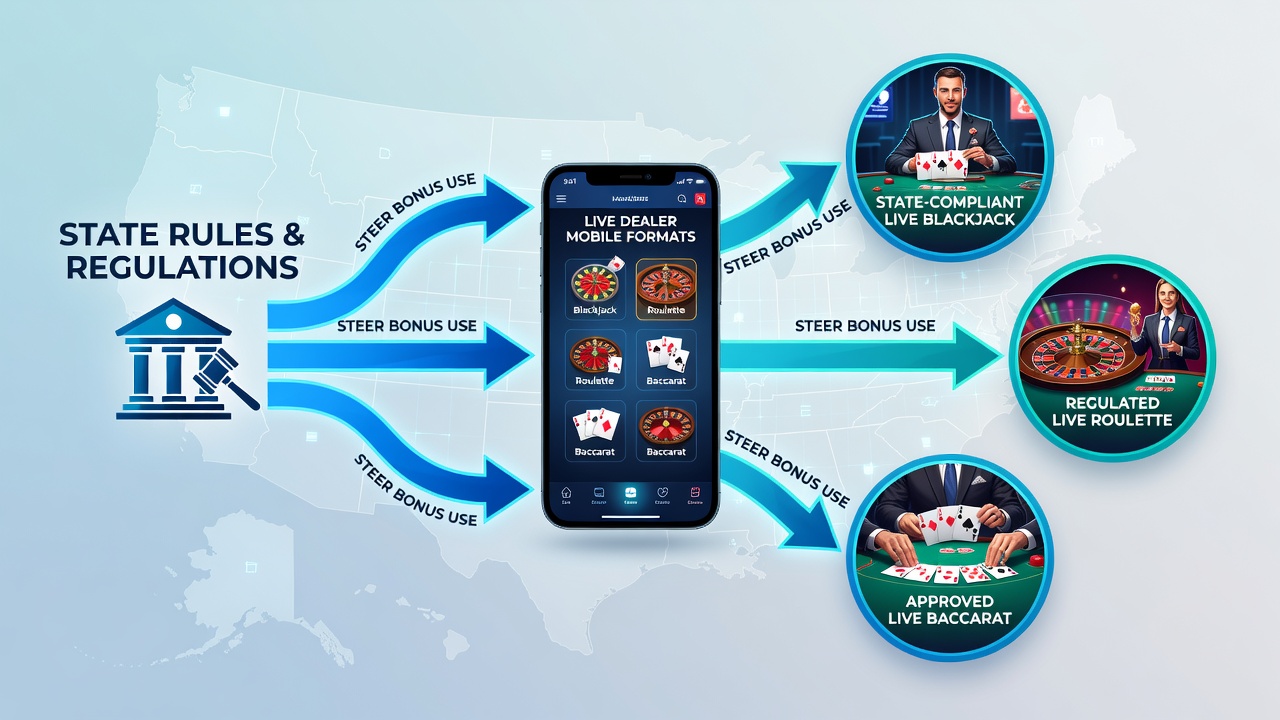
Although each state writes its own statutes, the pattern of favoring certain live dealer games repeats because regulators copy contribution tables from neighboring jurisdictions to simplify operator compliance. Illinois and New Jersey both assign 100 percent contribution to blackjack while limiting baccarat to 15 percent, and this alignment produces similar mobile play distributions across state lines according to aggregated operator filings. Australian state regulators in New South Wales apply comparable contribution structures for their licensed mobile platforms, which creates parallel traffic patterns on cross-platform live dealer lobbies. Those who review the filings note that blackjack and European roulette together account for more than half of all bonus-related mobile wagers in these jurisdictions during promotional windows.
Operator Implementation and Player Interface Design
Operators embed state-mandated contribution meters directly into mobile app interfaces so players see real-time progress toward wagering requirements, and this visibility reinforces the steering effect toward high-contribution tables. When a Pennsylvania user applies a deposit bonus, the app displays a progress bar that fills faster during blackjack rounds than during roulette rounds because the underlying code applies the state-mandated 100 percent versus 20 percent multipliers. Similar interface elements appear in Michigan apps following the August 2026 rule changes, where color-coded indicators highlight games that advance bonus clearance most efficiently. Figures from the American Gaming Association annual mobile report reveal that users who view these meters complete bonus requirements 34 percent faster when they remain on high-contribution live dealer formats throughout the session.
Conclusion
State rules continue to determine which live dealer formats receive the majority of mobile bonus activity through contribution percentages, expiration timers and interface requirements that operators must implement uniformly. Data collected through August 2026 shows consistent patterns across multiple jurisdictions where blackjack and select poker variants capture the largest share of bonus-driven mobile play. These regulatory mechanisms operate without direct player mandates yet produce measurable shifts in game selection on portable devices.