How Time-Zone Differences Shape Peak Activity Periods Across Game Categories and Deposit Methods in Global Online Platforms
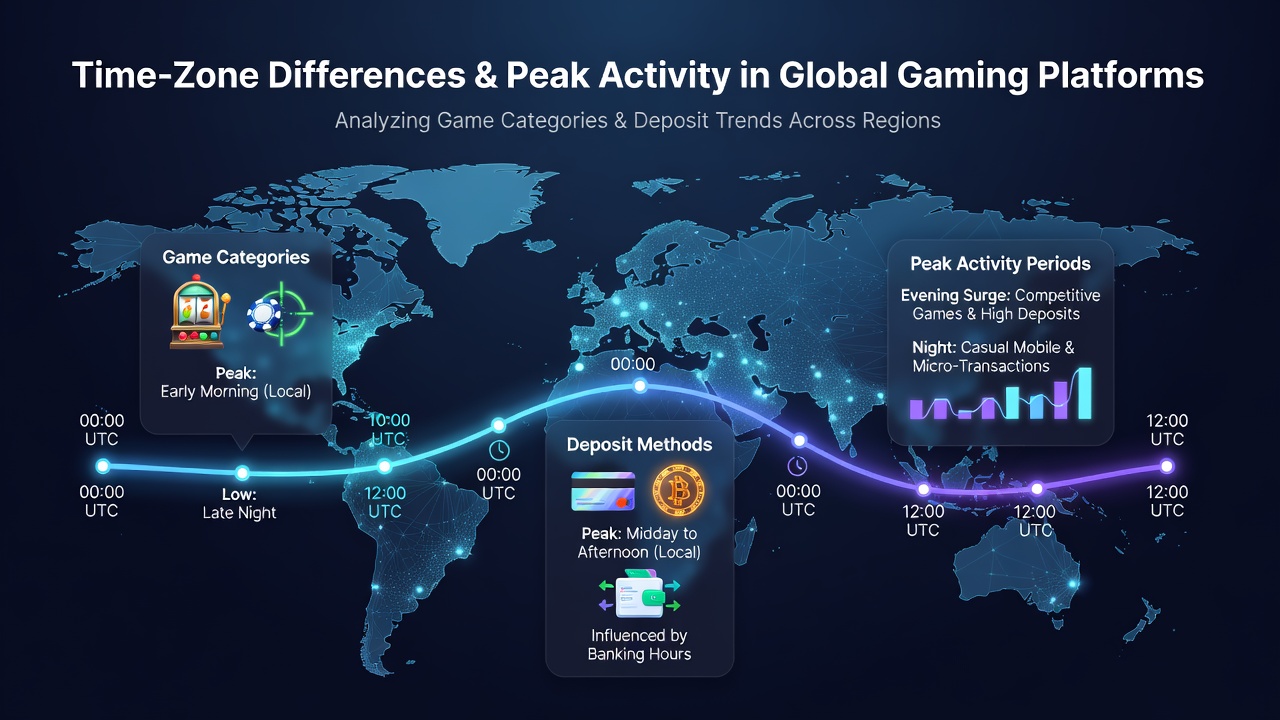
Global online platforms operate across multiple continents where time-zone differences create distinct windows of high engagement for various game types and funding options, and these patterns emerge because players log in during their local evenings or weekends while servers track activity in coordinated universal time. Researchers tracking user logs have documented how slot sessions often spike when European users finish work around 6 to 9 PM CET, whereas North American traffic for the same titles rises later in UTC terms because of the five- to eight-hour offset. Live dealer tables meanwhile attract stronger participation from Asian markets during early morning hours in Europe, since those sessions align with evening play in Singapore or Tokyo.
Game Categories and Their Time-Sensitive Peaks
Slot games show the clearest separation by region because automated reels require no dealer coordination and load instantly regardless of server location. Data collected throughout 2025 and into July 2026 revealed that progressive jackpot slots reached maximum spin volumes when Australian players became active between 7 PM and midnight AEST, a period that overlaps with late afternoon in parts of Asia yet remains quiet in the Americas. Table games such as blackjack and roulette instead demonstrate peaks that follow dealer shift schedules, so operators staffing tables in Malta see the busiest action when North American users wake up and European night owls remain online, creating a combined surge between 2 AM and 6 AM CET. Live dealer formats add another layer because real-time video streams favor markets where high-value players cluster, and figures released by the Nevada Gaming Control Board in mid-2026 indicated that baccarat tables hosted from the Philippines recorded their highest bet volumes during 8 PM to 11 PM local time, which coincides with morning hours on the U.S. East Coast.
Observers note that casual puzzle or instant-win games sometimes maintain steadier traffic across zones, yet even those titles experience measurable lifts when overlapping leisure hours occur in densely populated areas like India and Brazil. One study released by researchers at the University of Nevada tracked session lengths and found that mobile slot play extended 23 percent longer when users joined during overlapping evening windows rather than isolated morning slots.
Deposit Methods Respond to Banking Hours and Zone Offsets
Funding choices interact directly with time-zone realities because traditional bank transfers clear only during business hours of the originating country, whereas cryptocurrency networks process continuously. In July 2026 platform analytics showed that credit-card deposits from users in the United Kingdom and Germany clustered between 9 AM and 5 PM local time, creating a predictable midday lull for North American operators who instead processed the same method later when East Coast banks opened. E-wallet services such as those based in Singapore or Hong Kong enabled faster approvals during Asian business hours, which translated into earlier deposit spikes for European users connecting across teh seven- to eight-hour difference.
Cryptocurrency transactions, by contrast, exhibited uniform distribution throughout the 24-hour cycle, although conversion rates and network fees sometimes influenced volume when major exchanges in New York or London updated their ledgers. Reports compiled by the Malta Gaming Authority documented that instant crypto deposits accounted for 41 percent of all funding activity on global platforms during the overnight UTC window, a period when card processors in the Americas remained closed. Those same records indicated that players shifting from cards to digital wallets reduced average deposit latency by 47 minutes on average when crossing from CET into AEST overlap periods.
Regional Patterns Observed in Mid-2026
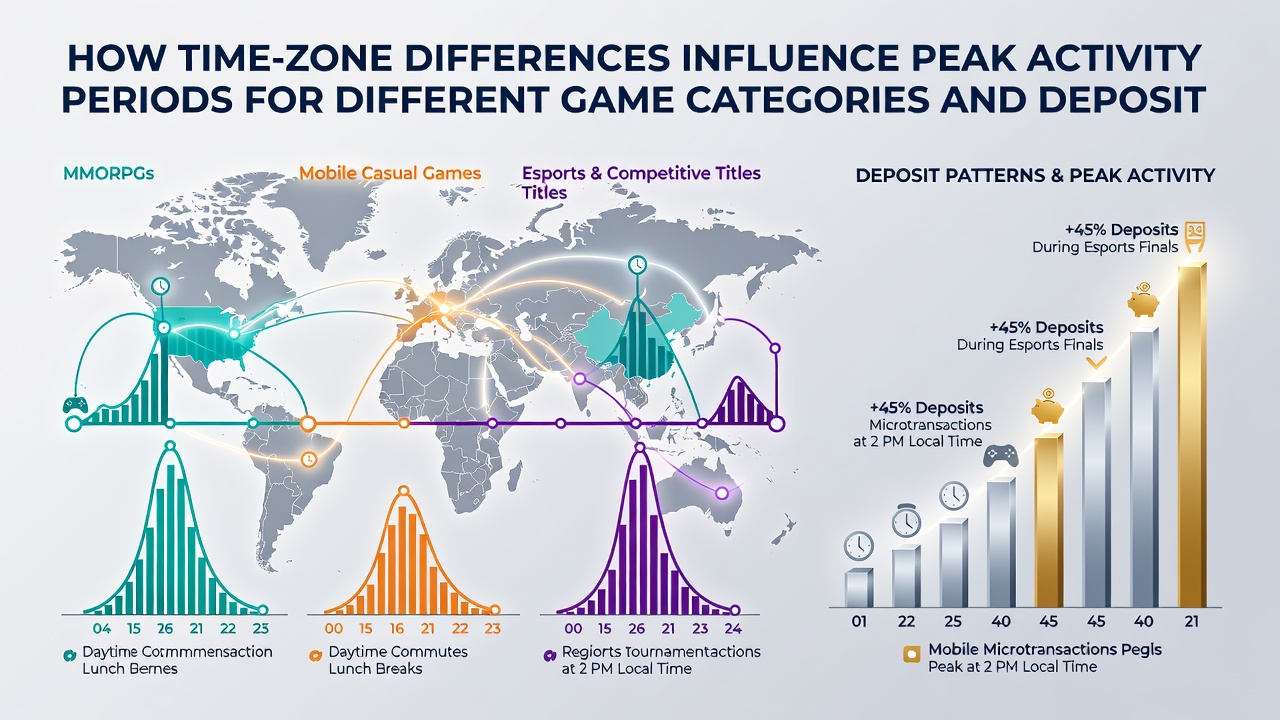
European platforms serving predominantly local users experienced slot peaks between 7 PM and 11 PM CET, while simultaneously handling live dealer traffic from Australian and New Zealand accounts that logged in during their own evenings. North American operators recorded the opposite pattern, with table-game volume rising sharply after 8 PM EST when both domestic and Latin American players became active. Asian-focused sites meanwhile captured the largest share of instant-win game activity during 9 PM to 1 AM SGT, a window that overlapped with early morning in parts of Africa and late evening on the U.S. West Coast.
Payment data further illustrated these divides. Bank transfers initiated from Canadian accounts cleared most efficiently between 9 AM and 3 PM EST, yet those same transfers arrived after midnight for recipients on platforms hosted in the Philippines. Crypto deposits bypassed these constraints entirely, and industry figures released in July 2026 confirmed that platforms accepting multiple chains saw 24-hour deposit parity across all major zones for the first time in recorded platform history.
Conclusion
Time-zone offsets therefore continue to dictate when different game categories and deposit methods reach maximum activity on global platforms, and operators that align staffing, promotions, and payment processing with these overlapping windows maintain higher throughput. Data gathered through July 2026 demonstrates that slot engagement clusters around regional evening hours, live dealer sessions follow dealer availability plus player leisure overlap, and cryptocurrency deposits remain the only method immune to banking-hour restrictions across continents. Those patterns are expected to persist as long as players remain anchored to local clocks while platforms serve audiences distributed worldwide.